
Biologics Treatment for Rheumatoid Arthritis
The purpose of this website is to provide educational information for practitioners on biologic materials, orthopedic protocols, regulatory considerations, and general best practices. This content is intended for professional education only and does not constitute medical advice or approved treatment recommendations.

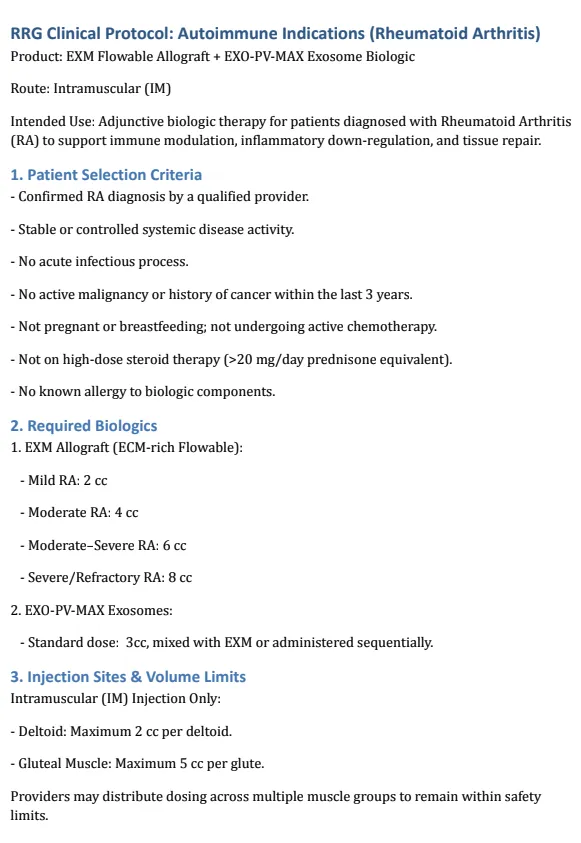
Biologics therapy may be utilized as an adjunctive approach in the management of Rheumatoid Arthritis, with the goal of supporting inflammation regulation, tissue health, and joint integrity. This protocol outlines considerations and procedural guidance for medical professionals administering intra-articular and periarticular biologic treatments in patients with inflammatory arthritis.
Patient Selection Criteria
Ideal Candidates:
Individuals with Rheumatoid Arthritis (RA)
Considerations:
Patients should be in generally good health, with no active infections or contraindicated conditions.
Contraindications:
Infections or Inflammation: Active infections or inflammation at the injection site.
Allergic Reactions: A history of severe allergies to injectables, exosome products, or anesthetics should be assessed.
Severe Degeneration: Severe degenerative changes requiring surgical intervention.
Chronic Conditions: Patients with uncontrolled diabetes, blood clotting disorders, or severe autoimmune diseases should be carefully evaluated or excluded.
Preparation
Clinic Preparation:
Sterile Environment: Ensure the treatment room is set up with sterile instruments and surfaces to prevent any contamination.
Required Equipment:
Biologics vial (check expiration date and manufacturer guidelines for storage and handling).
3-5 mL syringes
Topical antiseptic solution (chlorhexidine or alcohol) for skin preparation.
Ultrasound for guided injections.
Patient Preparation:
Informed Consent: Explain the procedure, expected benefits, risks, and aftercare. Address patient concerns.
Anesthesia Options: Offer local anesthesia for comfort. Allow sufficient time for effect (5-15 minutes for topical, 2-5 minutes for injectable).
Skin Preparation: Cleanse the shoulder area thoroughly with antiseptic to minimize infection risk.
Dosage and Administration
Treatment Types:
Intra-Articular Therapy: For joint pain and cartilage repair.
Intra-Muscular Therapy: For muscular injuries like rotator cuff tears or chronic tendinopathy.
Injection Protocol:
Use ultrasound to locate and mark injection sites.
Draw the appropriate volume of stem cell product (1-2 mL) into a sterile syringe.
Administer injections precisely into the joint space or muscle tissue using guided techniques.
Post-injection, apply gentle pressure to the site and assess for any immediate reactions.
Post-Treatment Care
Immediate Instructions:
Avoid strenuous activities for 24–48 hours to promote integration of the therapy.
Let the patient know that mild swelling, discomfort, or bruising may occur and typically resolves naturally.
Pain Management:
Recommend acetaminophen for pain relief, avoiding NSAIDs to preserve the inflammatory healing phase.
Follow-Up:
Instruct the patient to contact the clinic if they experience severe pain, significant swelling, or signs of infection (redness, warmth, fever).
Safety Precautions
Immediate Monitoring:
Observe the patient for 5-10 minutes after the procedure to ensure no adverse reactions, particularly allergic reactions.
Emergency Preparedness:
Keep epinephrine and antihistamines on hand in case of any unexpected allergic response.
Ensure that the clinical team is prepared to respond to emergencies, although such reactions are rare.
Infection Prevention:
Use strict aseptic techniques throughout the procedure to minimize the risk of infection.
Follow-Up and Monitoring
Initial Follow-Up:
Schedule a follow-up appointment 2-4 weeks after the initial treatment.
At this follow-up, document any changes in pain levels, mobility, or patient feedback.
Long-Term Monitoring:
Encourage regular check-ins over the following months to track improvements and address any further needs.
Additional sessions may be recommended, spaced 4–6 weeks apart for optimal outcomes.
Documentation
Procedure Notes:
Record all relevant details in the patient’s medical record, including:
Type and dosage of product used.
Injection locations and techniques used.
Patient response during the procedure.
Document any post-treatment observations or instructions provided to the patient.
Outcome Tracking:
Include notes on patient feedback during follow-up appointments to monitor the treatment’s effectiveness over time.
Track any need for adjustment in dosing or frequency in the patient’s file.
Summary
This protocol offers a structured, detailed approach to delivering biologics treatment to individuals with shoulder pain. By following these steps, clinics can ensure consistent treatments, enhancing patient experience and clinical outcomes. This detailed guide supports clinic staff in administering treatments confidently and addresses each aspect of care to minimize potential risks and maximize patient satisfaction.
About
Our mission is to equip practitioners with essential knowledge on biologics, covering protocols, regulatory guidelines, and foundational insights. This site serves as a trusted resource for navigating the evolving landscape of stem cell applications in clinical practice.
Disclaimer
The information on this website is provided solely for informational purposes and has not been reviewed or approved by the FDA or any other regulatory authority. It does not constitute medical advice, diagnosis, treatment, or any guarantees of medical outcomes and should not be used as a substitute for formal medical education and training, nor as a substitute for consultation with qualified healthcare professionals. Similarly, the content does not provide legal advice or guidance on regulatory compliance and should not replace consultations with qualified legal professionals.
DiscoverBiologics.com makes no representations or warranties, express or implied, regarding the accuracy, reliability, or applicability of the information provided to individual health circumstances or the legal use and adoption of biological products by clinics or providers.
By accessing this website, you agree to the terms and conditions outlined herein and accept full responsibility for compliance and clinical decisions made within your practice. You also acknowledge that you have been encouraged to review the disclaimer page and understand that any reliance on the information provided is voluntary and at your own risk and sole discretion.
2025 © All Rights Reserved. DiscoverBiologics.com