
Orthopedic Conditions
The purpose of this website is to provide educational information for practitioners on biologic materials, orthopedic protocols, regulatory considerations, and general best practices. This content is intended for professional education only and does not constitute medical advice or approved treatment recommendations.
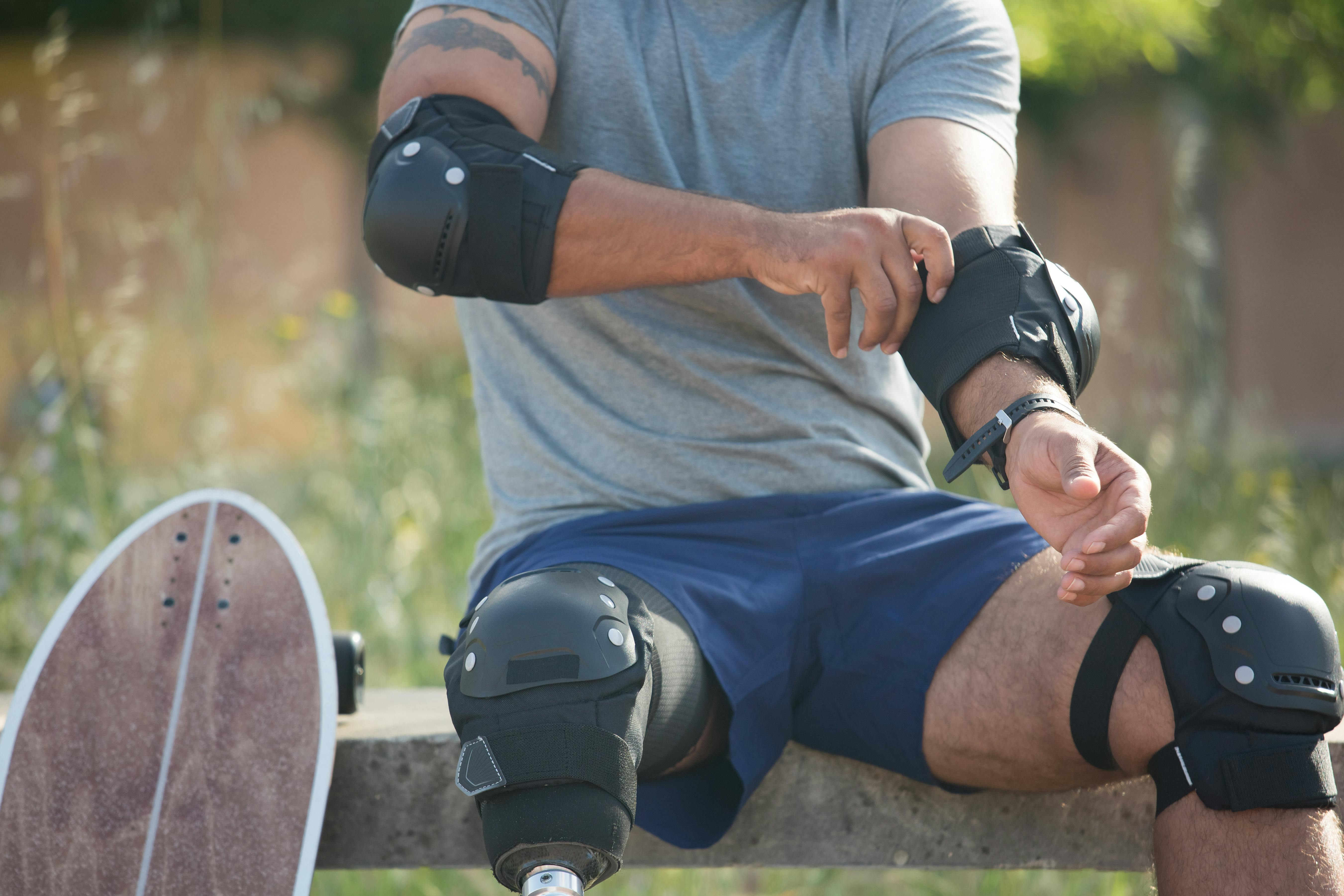
Biologic therapies in orthopedics are an area of active research and clinical interest. In musculoskeletal settings, biologic materials are studied for their potential role in supporting tissue environments, modulating cellular signaling, and contributing to structural and functional integrity within joints, tendons, ligaments, and other connective tissues.
This section is designed to provide clinicians with a high-level understanding of how biologics are commonly discussed and evaluated within orthopedic-focused care models.
Common Conditions Treated
In orthopedic and musculoskeletal practice, biologic materials are frequently explored in relation to:
Joint environments (e.g., knee, shoulder, hip, ankle)
Tendon and ligament structures
Soft tissue surrounding joints
Degenerative or overuse-related musculoskeletal changes
Post-procedural or post-injury tissue environments
These examples represent areas of clinical interest and do not imply specific indications, outcomes, or therapeutic claims.
Treatment Modalities
Mesenchymal Stem Cell (MSC) Therapy: MSC-containing biologic materials are studied for their potential role in: Supporting cellular communication within musculoskeletal tissues, participating gin immunomodulatory signaling pathways, interacting with the extracellular matrix in homologous orthopedic applications & contributing to the local tissue environment of joints and connective tissue
Exosome Therapy: Exosomes are extracellular vesicles involved in cell-to-cell communication. In orthopedic research contexts, they are explored for their role in: Facilitating intercellular signaling, Modulating local inflammatory cascades & Supporting tissue homeostasis within musculoskeletal environments
Procedure Overview
Patient Selection:
Inclusion Criteria: Patients with acute or chronic neurological deficits.
Exclusion Criteria: Active central nervous system infections or malignancies.
Preparation:
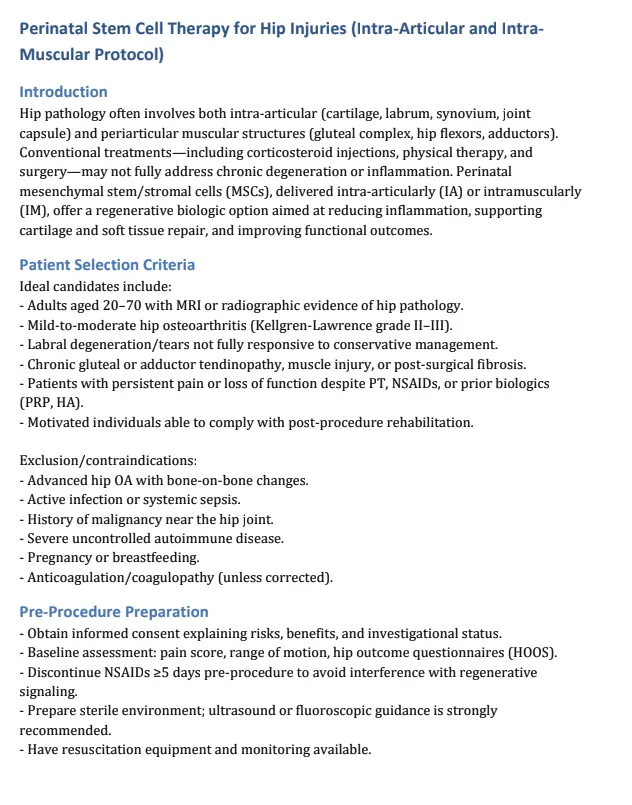
Typical preparation considerations discussed in orthopedic biologic frameworks include:
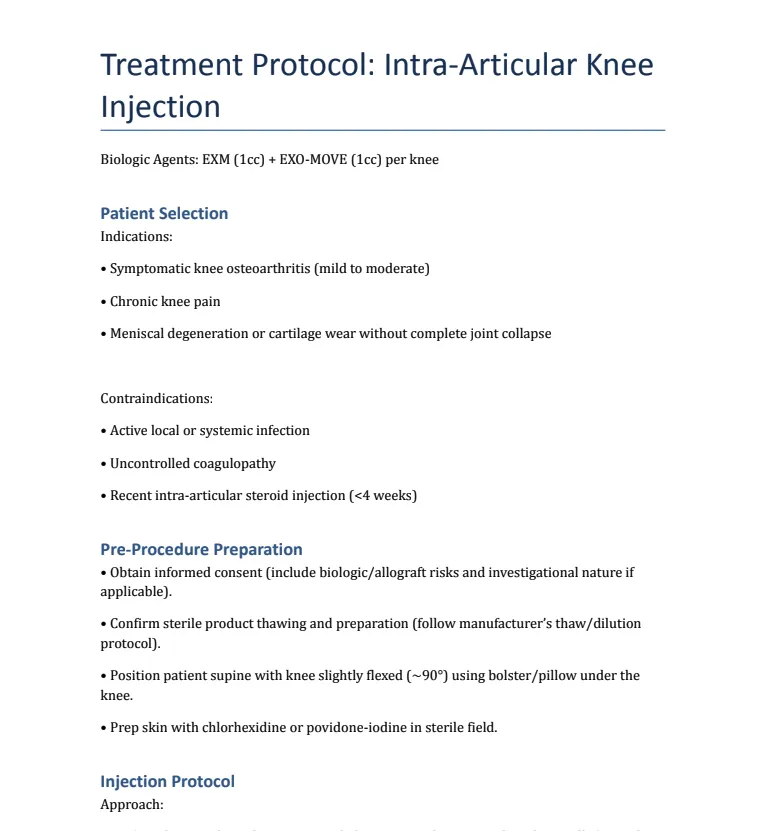
Informed Consent: Discuss the experimental nature, potential benefits, and risks.
Imaging: Obtain MRI or CT scans to identify target areas.
Assessment: of systemic and local tissue health
Administration:
In orthopedic settings, biologics are generally discussed within the context of:
Localized, site-specific application
Homologous use aligned with regulatory guidance
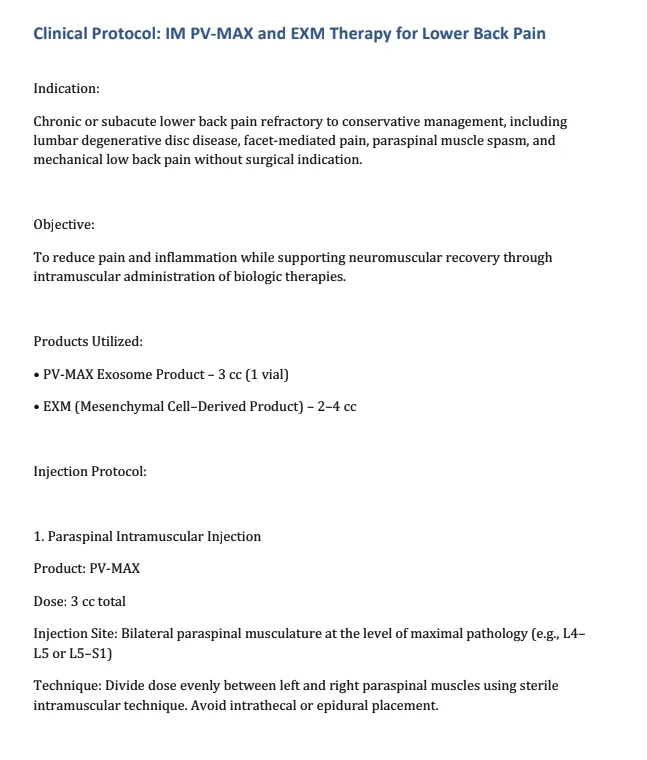
Technique selection based on practitioner scope and best practices (IM, IA)
Post-Procedure Care:
Post-procedure considerations often include:
Structured follow-up evaluations
Monitoring functional changes and patient-reported outcomes
Supportive rehabilitation or adjunctive therapies when appropriate
Documentation aligned with regulatory and professional standards
About
Our mission is to equip practitioners with essential knowledge on biologics, covering protocols, regulatory guidelines, and foundational insights. This site serves as a trusted resource for navigating the evolving landscape of stem cell applications in clinical practice.
Disclaimer
The information on this website is provided solely for informational purposes and has not been reviewed or approved by the FDA or any other regulatory authority. It does not constitute medical advice, diagnosis, treatment, or any guarantees of medical outcomes and should not be used as a substitute for formal medical education and training, nor as a substitute for consultation with qualified healthcare professionals. Similarly, the content does not provide legal advice or guidance on regulatory compliance and should not replace consultations with qualified legal professionals.
DiscoverBiologics.com makes no representations or warranties, express or implied, regarding the accuracy, reliability, or applicability of the information provided to individual health circumstances or the legal use and adoption of biological products by clinics or providers.
By accessing this website, you agree to the terms and conditions outlined herein and accept full responsibility for compliance and clinical decisions made within your practice. You also acknowledge that you have been encouraged to review the disclaimer page and understand that any reliance on the information provided is voluntary and at your own risk and sole discretion.
2025 © All Rights Reserved. DiscoverBiologics.com